
Ramadan guide
Ramadan for beginners: a simple guide
Ramadan is the Islamic month of fasting from dawn to sunset, prayer, Qur’an and giving. This guide explains what to expect, in plain words, if it is your first Ramadan.
Ramadan is the ninth month of the Islamic calendar. Muslims fast from dawn to sunset, pray more, read the Qur’an and give to people in need. Ramadan 2027 is expected to start on Monday 8 February and last 29 or 30 days. It ends with the celebration of Eid al-Fitr.
What is Ramadan?
Ramadan is the holy month in which the Qur’an began to be revealed. Muslims fast during the day, and they use the month to grow closer to Allah, to be patient and to help others.
Fasting in Ramadan is one of the five pillars of Islam. Qur’an 2:183 says that fasting was written for believers so that they may become mindful of Allah. Read more in The five pillars of Islam.
When is Ramadan in 2027?
Ramadan 2027 (1448 AH) is expected to begin on Monday 8 February 2027. It lasts 29 or 30 days. Eid al-Fitr is expected on 9 or 10 March 2027. The moon sighting confirms the dates.
See When is Ramadan 2027 in Kenya? for the full table.
How do I fast in Ramadan?
You fast from dawn (Fajr) until sunset (Maghrib). In that time you do not eat, drink or have intimate relations. In Kenya, the fast is about 13 hours each day.
- Make the intention (niyyah). This is a decision in your heart that you are fasting for Allah.
- Eat suhoor before dawn.
- Break the fast at sunset with iftar.
Fasting is also about behaviour. Avoid arguing, lying and bad words. See What breaks the fast? for clear answers.
What does a normal day in Ramadan look like?
Life goes on as usual in Ramadan, with a changed rhythm. Many people sleep a little less and spend more of their time in prayer and good deeds.
| Time | What you do | Tip |
|---|---|---|
| Before dawn | Suhoor (pre-dawn meal) and Fajr prayer | Eat and drink before Fajr time begins. |
| Morning | Work or study as usual | Read a little Qur’an if you can. |
| Midday and afternoon | Dhuhr and Asr prayers | Rest when you can. Be patient and kind. |
| Sunset | Iftar (breaking the fast) | Many Muslims break the fast with dates and water. |
| Evening | Maghrib and Isha prayers, then Taraweeh | Taraweeh is the special night prayer of Ramadan. |
| Night | Dua, Qur’an and rest | Sleep early enough for suhoor. |
What should I eat at suhoor and iftar?
Eat simple, healthy food and avoid too much sugar and oil. At suhoor, choose food that keeps you full for longer, such as oats, eggs, beans, ugali or rice with vegetables, and drink plenty of water.
At iftar, the Prophet (peace be upon him) used to break his fast with dates and water. After that, pray Maghrib and then eat a balanced meal. In Kenya, many families enjoy dates, uji, samosas, mandazi and tea. Do not overeat.
Who has to fast, and who can skip?
Fasting is required of adult Muslims who are healthy and at home. Those who are sick, travelling, on their period, in post-birth bleeding or children who have not reached puberty do not have to fast. Pregnant and breastfeeding women who fear harm may also delay, according to many scholars.
Missed days are usually made up after Ramadan. If you can never fast, you pay Fidya. Read Fidya and Kaffarah. Ask your local scholar about your own case.
What are some tips for a first Ramadan?
- Start slowly. Fast a few days before Ramadan if you can.
- Drink water between iftar and suhoor.
- Plan your Qur’an reading. Even one page a day is a good start.
- Join a mosque. Praying Taraweeh together builds community.
- Learn the last ten nights. Laylat al-Qadr is in them. Read Laylat al-Qadr 2027.
- Be kind. Give, forgive and share your food.
How do I give in Ramadan?
Giving is a big part of Ramadan. Many Muslims pay their Zakat and give extra Sadaqah (voluntary charity) in the month. Before Eid, every Muslim who can afford it pays Zakat al-Fitr (Fitrana).
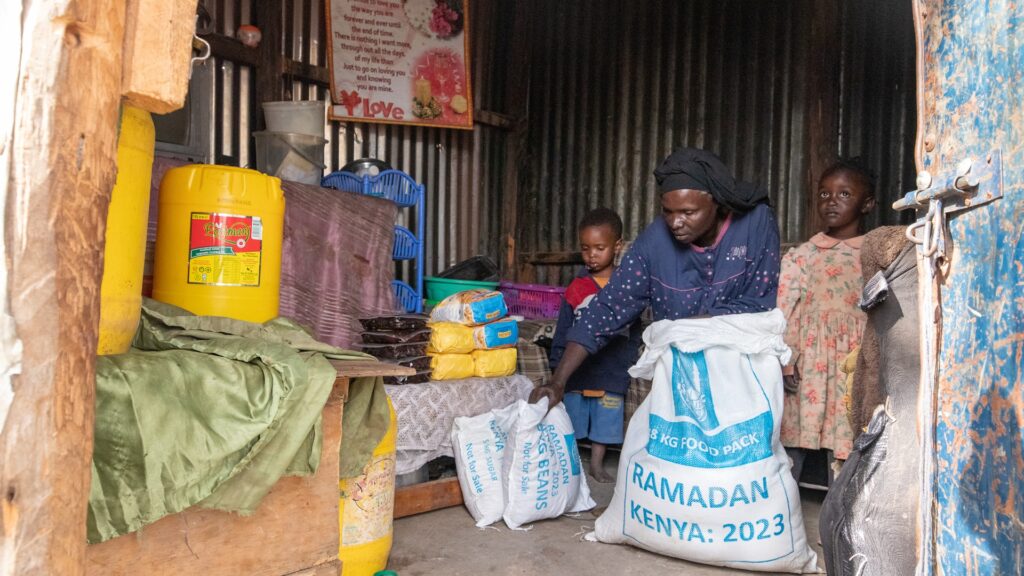
With Islamic Relief Kenya, KES 550 feeds a family of 7 for a day, KES 3,700 for a week and KES 15,500 for the month. Give on our donation page by card or M-Pesa, or Lipa na M-Pesa PayBill 949210 with account IFTAR. Islamic Relief Kenya is registered with the Kenya NGO Board (Reg. No. 218/051/204/0374/3386).
Feed a family this Ramadan
Give from KES 550 a day. Pay by M-Pesa or card, in Kenya shillings or other currencies.
Give this RamadanFrequently asked questions
What is Ramadan?
Ramadan is the ninth month of the Islamic calendar. Muslims fast from dawn to sunset, pray more, read the Qur’an and give to charity. It is the month in which the Qur’an began to be revealed.
When does Ramadan 2027 start in Kenya?
Ramadan 2027 is expected to start on Monday 8 February 2027, after the moon is sighted on the evening of 7 February. It lasts 29 or 30 days, and Eid al-Fitr is expected on 9 or 10 March 2027.
How do I start fasting as a beginner?
Make the intention, eat suhoor before dawn and break the fast at sunset. If you are new, try fasting a few days before Ramadan. Drink plenty of water at night and eat simple food.
What is suhoor?
Suhoor is the meal before dawn, before the fast begins. The Prophet (peace be upon him) encouraged it because there is blessing in it. Choose food that fills you for longer, and drink water.
What is iftar?
Iftar is the meal that breaks the fast at sunset. Many Muslims start with dates and water, then pray Maghrib, then eat a full meal. Many families and mosques share iftar together.
What is Taraweeh?
Taraweeh is a special night prayer prayed in Ramadan after the Isha prayer, usually in the mosque, with long recitation of the Qur’an. It is a recommended prayer, not an obligation. Ask your mosque about the number of units.
Can I still go to work or school while fasting?
Yes. Most Muslims go to work or school as usual while fasting. Plan your hardest tasks for when you have more energy, and drink and eat well at night. If you fall ill, you may break the fast.
What is Zakat al-Fitr?
Zakat al-Fitr, also called Fitrana, is a small charity paid by each Muslim before the Eid prayer, for themselves and those they support. It is about one saa’ (about 2.5 to 3 kg) of staple food, or its value. The amount in KES is announced each year.
Rulings on this page are general guidance. Ask your local scholar about your own situation. Last reviewed 2 October 2026.
Turn knowledge into giving
Give your Zakat or Sadaqah in Kenya shillings by M-Pesa or card. M-Pesa PayBill 949210.