
Last year, Islamic Relief carried out more than 200,000 Qurbanis across 28 countries around the world, reaching over 3 million people.
Our Quality Assured Qurbani programme provides meat to families who might otherwise not be able to afford it throughout the year, but how do we ensure our process – from choosing our rightsholders to giving a family a chance to have a hearty meal on Eid day – is fair and up to standard?
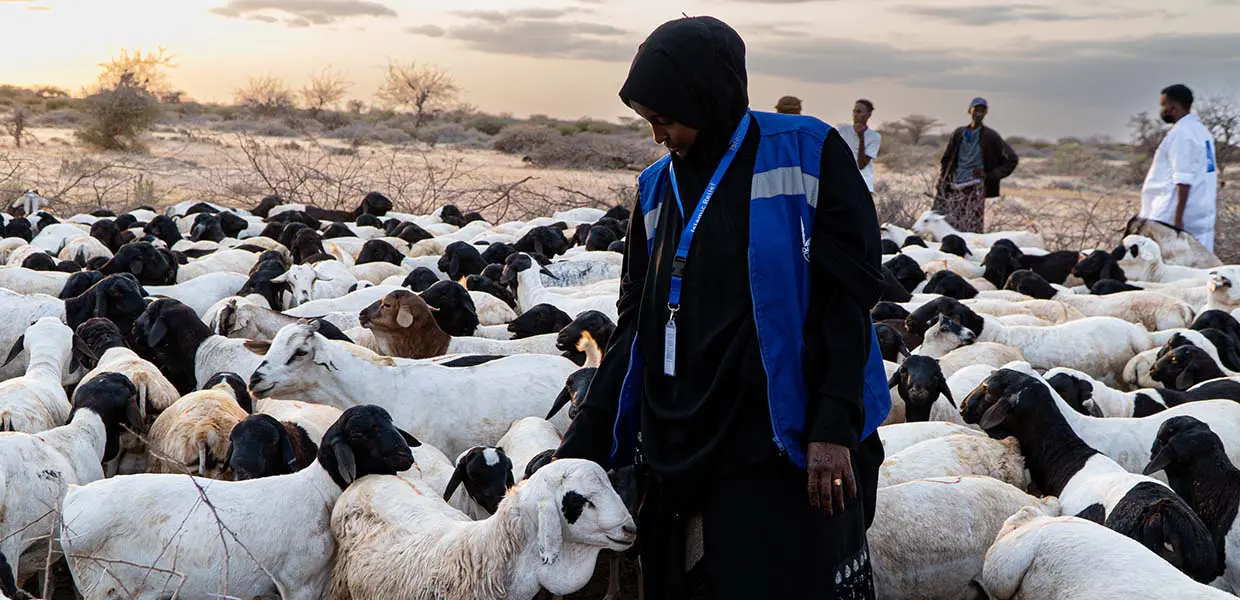
We visited our field offices in Kenya during Qurbani 2023 to meet some of the faces behind our Kenya Qurbani programme, and see firsthand all the procedures that go into ensuring top quality Qurbani.
The selection process
Going on field with Abdirashid Yussuf, a Programme Manager at Islamic Relief in Kenya, he explained that the process of the Qurbani programme begins with community mobilisation, raising awareness and informing the community about the programme.

Image: During our visit to Islamic Relief’s field office in Kenya, we explored the extensive process behind our Quality Assured Qurbani programme.
A selection committee is then formed. They are given the criteria for selecting rightsholders, ensuring that the most deserving individuals are chosen through various checks including a house-to-house identification process.
The names of the selected and eligible rightsholders are then announced at a community meeting, confirming that they are the most deserving cases for the Qurbani programme.
Health and safety concerns
The checks don’t end there, as a pre-selection verification of the animals takes place, with professionals from different fields coming in to check the animals for good health, and compliance with Qurbani rules.
Among those wandering through the field at our office in Kenya, Imam Ali Hamdi Hassan, an expert in Shariah, was thoroughly checking the animals’ teeth and bodies.

Image: Imam Ali completed thorough checks of the animals before slaughter to ensure the Qurbani was Shariah-compliant.
He emphasised the importance of ensuring that animals used for slaughter must be suitable according to Islamic guidelines. The Imam mentioned specific conditions that must be fulfilled, including avoiding animals with low body weight, missing limbs or limping, sickness or diseases, and poor body condition. He added that the animal must not be stolen or owned by someone else; it must belong to the person performing the Udhiyah or Qurbani.

Image: Imam Ali checked the Qurbani animals’ teeth and bodies to ensure good health.
The Imam reiterated that the purpose of his visit was to ensure the adherence to Islamic guidelines for Qurbani, bringing individuals closer to Allah and fulfilling their Udhiyah obligation. He added that the animals presented in the field met the criteria.
The time of sacrifice
The whole process involves many health and safety checks, and during the time of slaughter itself, veterinary and public health officers are involved to examine the animals before and after the sacrifice to ensure that the meat is safe to eat.
Abdijamal Tawane, an animal health technician employed by Garissa County, Kenya, explained the importance of conducting antemortem – or pre-death – inspections for the animals to be slaughtered, taking us through his key steps.

Image: Animal health technician Abdijamal explained the importance of inspecting the animals before the slaughter to avoid health issues.
Abdijamal first evaluates the body condition of the animals, looking for signs of good health and nutrition. He then carefully checks for respiratory issues in the animals such as coughing or difficulty breathing, which could affect the quality of the meat or pose health risks.
Body posture is also checked, ensuring the animals can stand and move without discomfort or signs of lameness, to identify any injuries that may indicate underlying health issues.
Animals showing signs of disease or illness are promptly identified and removed from the slaughter process to maintain the desired standards.
Abdijamal shared that these inspections are crucial to ensure the production of high-quality, uncontaminated meat that is free from disease. This helps Islamic Relief prioritise the health and wellbeing of the community.
Handing out the Qurbani
Islamic Relief selects suitable sites to distribute the Qurbani meat following the sacrifice. Much thought goes into this process, ensuring we choose areas which are shaded, have access to toilets, and water facilities.
The Qurbani takes place within a four-day period, starting on Eid al-Adha and continuing for three days after Eid.
Timeliness is crucial, and we aim for all our rightsholders to receive their meat and have enough time to prepare and cook their delicious meals for Eid.
Expressing his gratitude to take part in the process, 32-year-old student Hassan explained that he was thankful to us for providing goats and sheep to those in need, allowing them to celebrate Eid al-Adha with meat.

Photo: 32-year-old student Hassan expressed his gratitude for the Qurbani programme.
Coming from a small village in Garissa County, Hassan explained how only 30-50% of the population can afford a comfortable life, as many families have to live together to support one another.
Due to a disability, the past months had been challenging for Hassan, after he was forced to pause his studies because he was unable to pay tuition fees.
The ongoing drought in Kenya has led to a high number of animal deaths, exacerbating the villagers’ struggles, and residents also have to travel up to 10km to fetch water, causing significant challenges.
Islamic Relief’s Qurbani programme provides meat packs to some of the world’s most vulnerable and disadvantaged communities, helping families like Hassan’s in Kenya, as well as communities in Palestine, Bangladesh and more.
View the full process of our Quality Assured Qurbani programme here.
Don’t miss out. Give your Qurbani with Islamic Relief this year.