

In spring of 2024, Garissa County in Kenya was affected by floods that claimed the lives of 267 people in Kenya, as well as massive property damage, loss of possessions and displacement of over 380,000 people in the country.
Islamic Relief Kenya was on hand to help survivors deal with the aftermath of the disaster, supporting them with multi-purpose cash transfers and food aid as they tried to recuperate and rebuild their lives after such devastating flooding. However, the floods didn’t just enact physical damage – alarmingly, these types of disasters can also cause a rise in gender-based violence amongst affected communities.
Massive natural disasters can exacerbate vulnerabilities amongst survivors, with food and shelter becoming harder to come by. Unfortunately, this can lead to vulnerable women to become exposed to domestic violence. Social networks that could’ve provided support previously are disrupted, and vulnerable individuals can become isolated. These crises can place extraordinary stress upon survivors, which are only exacerbated by the spectre of domestic violence.
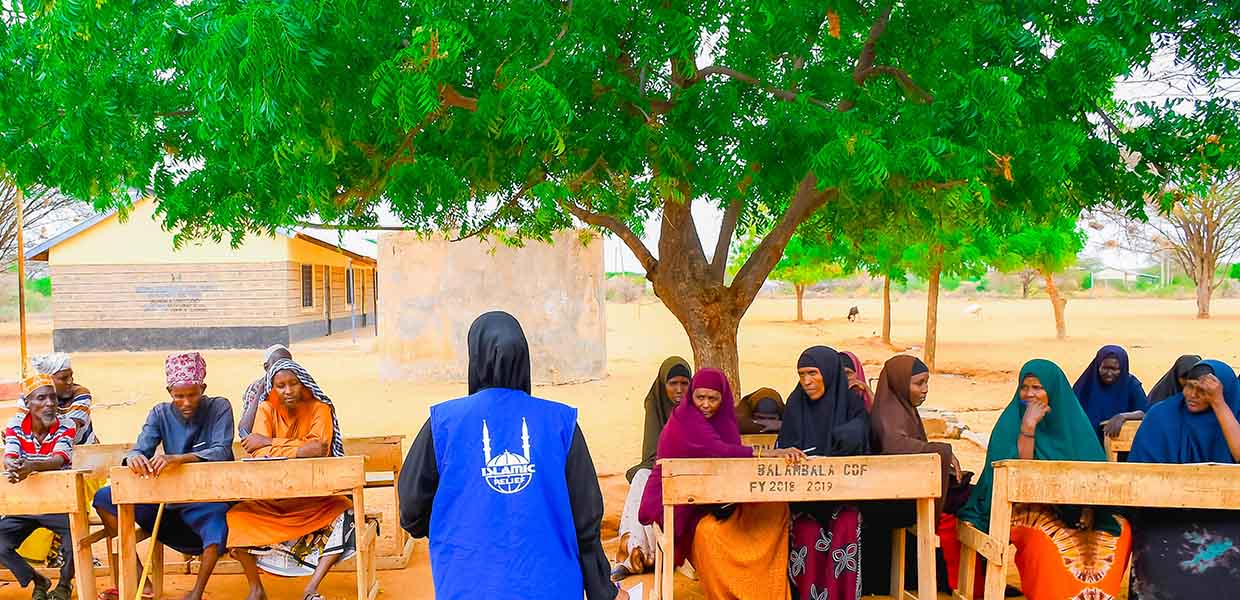
To combat this rise in domestic violence, Islamic Relief Kenya has trained local community members as gender champions. Thanks to the Scottish Government’s Humanitarian Emergency Fund (HEF), so far, our teams have been able to train 200 champions, 122 women and 78 men. Communities can access education about gender-based issues, like domestic violence, and their causes. It was important to include men in this process, so they too can understand the issues affecting women in their community and advocate for them.
When Islamic Relief began this programme there was some initial resistance from men in the community. Many thought it was a foreign concept or ideology that was intrusive to their own area.
By bringing male community members on board during the training and making them a part of it, it helped demonstrate why this initiative was so important in the fight against gender-based violence. This in turn meant the men involved in the training programme would go on to educate these crucial messages to the other men in the community. Islamic Relief teams also brought in religious leaders into the process, as many community members would refer to their local Imams on issues such as these.
Part of the training included psychosocial support, so our champions can help care for the psychological needs of those who have been affected by gender-based violence. They then use these skills to run counselling sessions for their local community and amongst themselves.
But it’s not just taking care of people who have been hurt or traumatised by domestic violence. Our champions also tell their own stories about gender-based violence to their local community, so they can clearly show just how damaging this issue is to women, their families, and the community as a whole. The trained champions help people understand what others have gone through to prevent further cases from happening.
This project has already had great success and has even helped inspire other organisations to do the same. There are different groups of gender champions springing up in the rest of the country, some started by smaller local groups, and others by larger organisations such as UNICEF in their own training programmes.
The replication of this programme across different areas of Kenya and to other local partners is wonderful to see, as it provides a community-led, grassroots solution to a serious problem, but also a problem that not many people would first think about or even realise is prevalent when a natural disaster such as flooding occurs.